Essential Kilimanjaro Gear Checklist: The Ultimate Preparation Guide for First-Time Climbers
Welcome to Naturehiketours & Adventures, recognized as the Best DMC & local tour company in Tanzania plus East Africa! Embarking on a journey to the roof of Africa—Uhuru Peak at 5,895 meters above sea level—is an extraordinary, life-changing adventure. As your trusted local experts, we ensure your trek is not only safe and memorable but also seamlessly organized from start to finish.
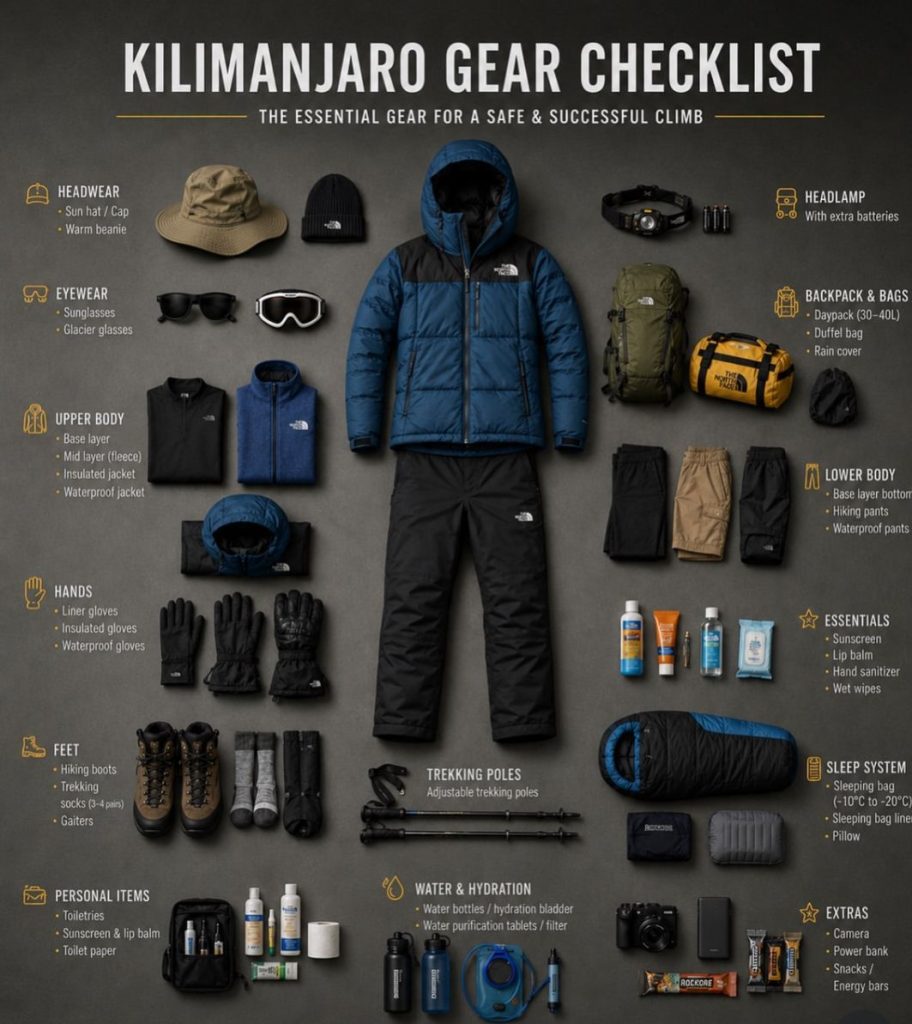
Proper preparation and gear selection are critical factors for a successful summit. Below is our comprehensive Kilimanjaro Gear Checklist, explaining every essential item shown in our guide to help you pack like a pro.
1. Headwear
Protecting your head from extreme high-altitude sun during the day and freezing temperatures at night is vital:
Sun Hat / Cap: Protects your face and neck from harsh UV radiation during warm daytime trekking. Warm Beanie: A thermal, fleece-lined knit hat to keep your head warm during cold evenings and the midnight summit push.
2. Eyewear
High altitudes mean stronger sunlight and glare:
Sunglasses: Quality UV-blocking sunglasses to prevent eye strain and damage from high-altitude sunlight.
Glacier Glasses: Provides extra protection against intense wind, glare, and dust during the upper mountain ascent.
3. Upper Body (Layering System)
The key to staying comfortable on Kilimanjaro is layering, allowing you to adapt as temperatures change across five climatic zones:
Base Layer: Moisture-wicking synthetic or merino wool long-sleeve top to keep sweat away from your skin.
Mid Layer (Fleece): An insulating fleece jacket to retain body heat during cool trekking days.
Insulated Jacket: A high-quality down or heavy synthetic parka engineered for sub-zero summit night conditions.
Waterproof Jacket: A breathable, windproof, and waterproof hard-shell jacket (Gore-Tex or equivalent) for rain or snow protection.
4. Lower Body
Proper leg wear ensures mobility, warmth, and moisture protection:
Base Layer Bottoms: Thermal thermal tights or long underwear for cold nights and summit push.
Hiking Pants: Lightweight, quick-dry trekking pants for daily walking.
Waterproof Pants: Rain pants to layer over your hiking trousers during unexpected downpours.
5. Hands
Keeping your hands dry and warm prevents frostbite and severe discomfort:
Liner Gloves: Lightweight gloves for mild trekking days or underneath heavier gloves.
Insulated Gloves: Fleece or fleece-lined warm gloves for chilly mornings.
Waterproof Gloves / Mittens: Heavy-duty, waterproof, insulated mittens or gloves designed for freezing summit conditions.
6. Feet & Footwear
Your feet carry you every step to Uhuru Peak—taking care of them is top priority: Hiking Boots: Sturdy, waterproof, broken-in ankle-support trekking boots.
Trekking Socks (3–4 pairs): Wool or synthetic moisture-wicking socks, plus heavy thermal socks for summit night.
Gaiters: Protective leg covers to keep dust, rocks, mud, and snow out of your boots.
7. Headlamp
Headlamp with Extra Batteries: Crucial for navigating around camp after dark and mandatory for the midnight summit climb. Always pack extra batteries or a power bank charger.
8. Backpacks & Bags
Organizing your gear properly ensures ease of movement and protection from the elements:
Daypack (30–40L): The backpack you carry personally each day containing water, extra layers, camera, sunscreen, and rain gear.
Duffel Bag: A durable, water-resistant duffel bag (up to 15 kg) carried by our dedicated porter team containing your main sleeping and clothing gear.Rain Cover: A fitted waterproof cover for your daypack to protect equipment during rain.
9. Trekking Poles
Adjustable Trekking Poles: Strongly recommended to reduce impact on your knees during steep ascents and long downhill descents.
10. Sleep System
A good night’s sleep is key to high-altitude recovery: Sleeping Bag (-10°C to -20°C / 14°F to -4°F): High-rated, warm mountain sleeping bag.Sleeping Bag Liner: Adds extra warmth and hygiene inside your sleeping bag.Inflatable Pillow: Compact pillow for enhanced sleep comfort.
11. Water & Hydration
Staying hydrated is one of the single most effective ways to prevent acute mountain sickness (AMS):Water Bottles / Hydration Bladder: A 2–3 liter capacity system (Nalgene bottles are recommended for summit night as bladder hoses can freeze).Water Purification Tablets / Filter: For purifying treated water provided at camp.
12. Personal Items & Essentials
Maintaining personal hygiene and skin protection enhances your daily comfort:Sunscreen & Lip Balm (High SPF): Essential against intense high-altitude rays.Hand Sanitizer & Wet Wipes: Crucial for maintaining hygiene on the trail where running water is limited.
Toiletries & Toilet Paper: Personal hygiene kit and biodegradable toilet paper.
13. Extras & Electronics
Camera: Capture
unforgettable memories and landscapes.
Power Bank: High-capacity portable charger (cold temperatures drain battery power quickly).
Snacks / Energy Bars: High-calorie, quick-energy snacks for tough climbs like summit night.
Why Book Your Kilimanjaro Trek with Naturehiketours.com?
At Naturehiketours & Adventures, we go above and beyond to ensure your safety, comfort, and success on Mount Kilimanjaro:
Unrivaled Local Expertise: As the premier local DMC in Tanzania, our licensed guides possess over a decade of firsthand experience navigating every route on the mountain.
Industry-Leading Summit Success Rates: Our carefully paced itineraries, altitude acclimatization protocols, and professional care guarantee the highest summit success rates.
High-Quality Gear Rentals: Missing gear? We provide top-tier mountain equipment rentals directly upon arrival in Moshi/Arusha.
Fair Treatment of Porters: We are committed to ethical trekking, ensuring fair wages, nutritious meals, and warm gear for our dedicated porter crew.
Ready to Conquer Mount Kilimanjaro?
Let us turn your adventure dream into reality. Contact us today at naturehiketours.com to customize your Kilimanjaro trekking itinerary!